Leads arrive. Follow-up drifts.
Forms, messages, inboxes, and CRM stages disagree, so context disappears before the next person acts.
AI systems / automation / operational repair
We find the operational bottleneck, design the smallest useful system, and ship the conversion path, workflow, AI control, or operator surface needed to make it reliable.
The wrong-build tax
They start when nobody maps the trigger, decision, owner, data, exception, and next action before implementation. The result is a polished surface sitting on top of the same operational leak.
We start with the repeated failure, not the fashionable stack.
Forms, messages, inboxes, and CRM stages disagree, so context disappears before the next person acts.
Approvals, reminders, exceptions, and client updates live in one person’s head instead of a visible system.
Memory, retrieval, tools, permissions, and human approval are treated as afterthoughts, so the demo cannot become dependable work.
Choose the broken lane
Each route begins bounded. We diagnose the actual constraint, recommend the smallest useful intervention, and expand only when the evidence supports it.
For teams with a real repeated workflow but an unclear AI or automation starting point.
Connect capture, qualification, ownership, follow-up, and CRM state so high-intent requests stop disappearing.
Make forms, campaign context, pipeline stages, notifications, and operator actions agree end to end.
Rebuild positioning, hierarchy, responsive behavior, CTA logic, form flow, metadata, and release evidence around one buyer action.
Turn retrieval, memory, tools, approvals, and operator guidance into an inspectable environment instead of a loose chat demo.
Keep conversion-critical forms, integrations, automations, dashboards, and exception paths observable after launch.
Systems, not slides
The visual layer is only useful when the states, routes, data, ownership, and recovery path beneath it can be inspected.
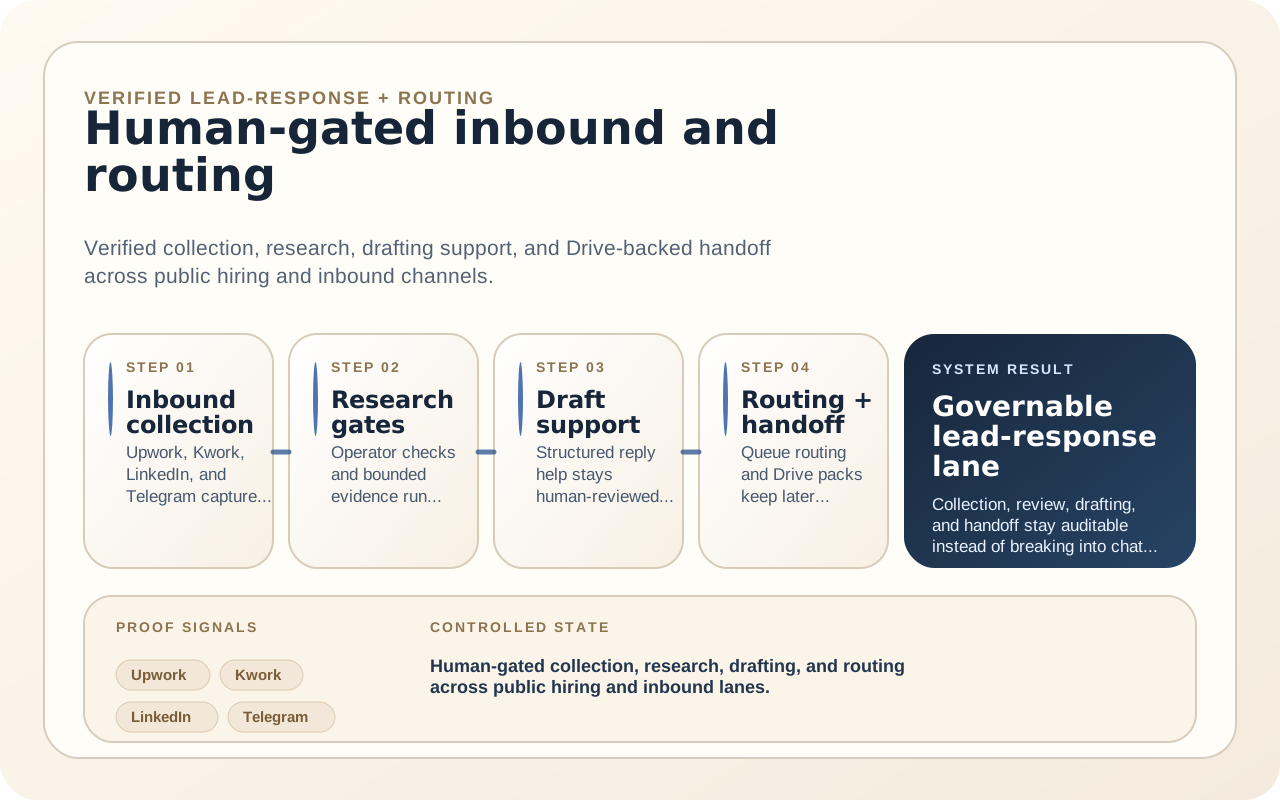
Capture context, qualification, ownership, response state, and the next human action remain visible instead of disappearing between tools.
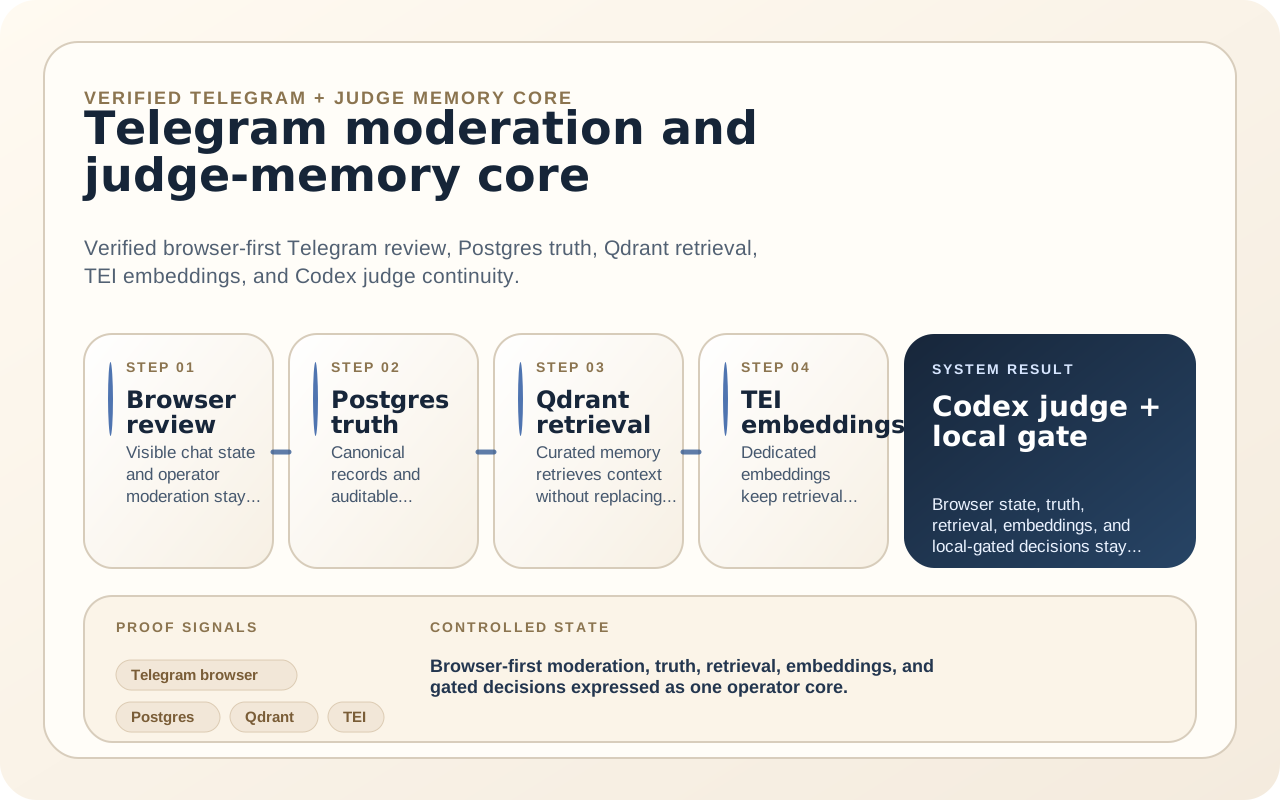
Structured retrieval, memory updates, tool access, and human-safe decisions inside an inspectable workflow.
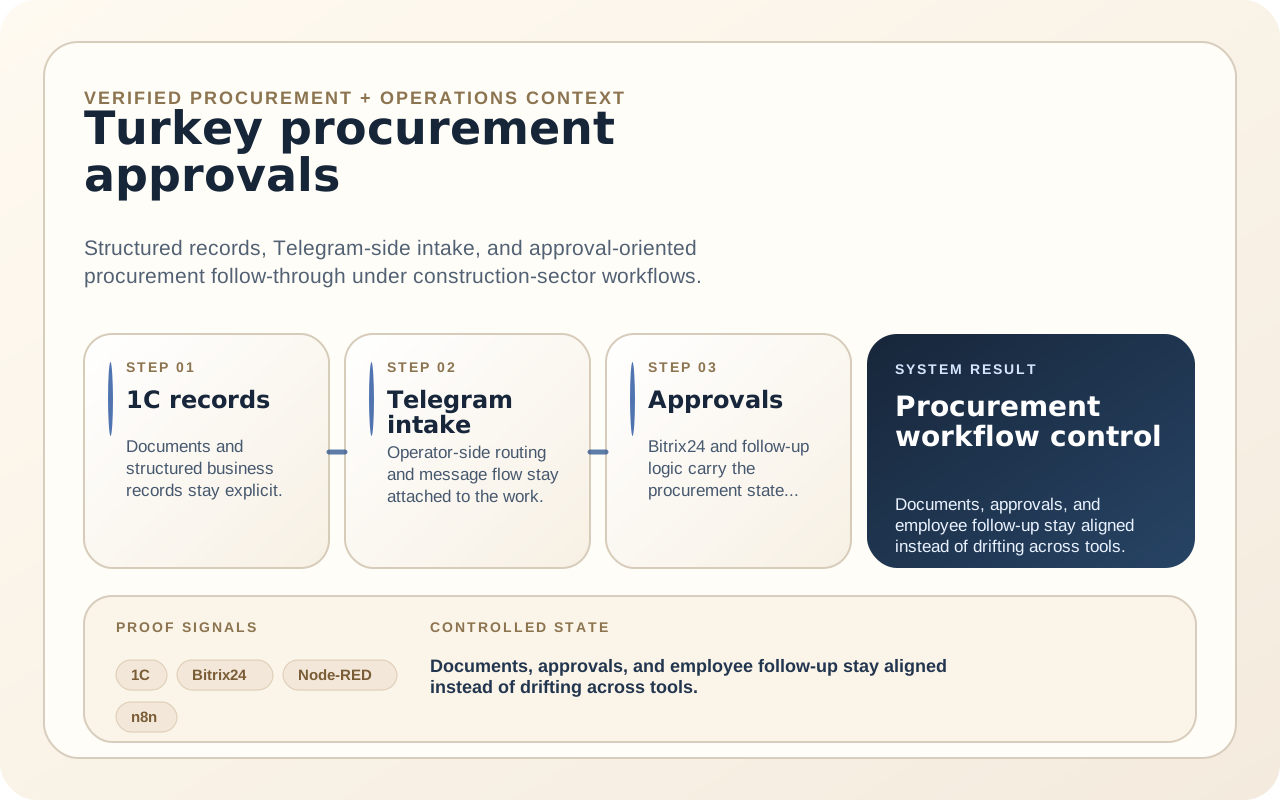
Structured intake, scheduling, approvals, status signals, and operator handoffs for work that spans the field and back office.
Cases are framed around operating patterns. Confidential client details and unsupported outcome claims are intentionally excluded.
One connected capability map
No single platform solves the workflow. We connect the parts that must agree, then expose the state a human needs to make the next decision.
Not sure where to start? Ask for the smallest useful route.Web forms, Telegram, WhatsApp, Instagram, inboxes, qualification, attribution, and response ownership.
Bitrix24, HubSpot, Zoho, 1C, pipeline rules, approvals, field mapping, exceptions, and reporting signals.
n8n, Node-RED, Make, Zapier, APIs, dashboards, Django/DRF runtimes, React surfaces, and admin controls.
Retrieval, structured memory, classification, drafting, tool use, permission limits, evaluation, and human approval.
Delivery method
One repeated failure, one owner, current tools, urgency, and the business result that must become dependable.
Routes, screenshots, payloads, data contracts, handoffs, logs, user states, and operational constraints.
A focused conversion path, automation, interface, integration, or control surface with explicit acceptance criteria.
Responsive evidence, accessibility checks, failure-state coverage, analytics integrity, and a clear residual-risk handoff.
Fit filter
We are strongest when there is an existing workflow, a visible business cost, an accountable owner, and enough access to inspect what is actually happening.
Start with one broken lane
Describe the failure in plain language. We will route it to the smallest useful audit, repair, or build.
Open the bounded intake